GRADA PRESENTS · COFFEE 101° · A DOCUMENTARY SERIES
SPECIALTY COFFEE,
explained.


START HERE · FROM BEAN TO BOTTLE
101°
Two minutes on why this series exists.
WATCH ON YOUTUBE →Coffee is a global obsession, yet almost nobody gets taught how it works. Coffee 101 is our answer: a free video series that follows specialty coffee from a legend about sleepless goats all the way to the cocktail in your hand.
- Eleven short episodes. Seed to spirit.
- A question or two under each episode — 12 of 14 unlocks a free bottle. First hundred only.
- Curiosity, not curriculum. Watch in any order, skip any quiz.

READ THE introduction
TRANSCRIPT (AUTO-CAPTIONS, MACHINE-CLEANED). SPEAKERS: THURMAN, CLARA SANTAERA.
Hello everyone, Thurman here from Measured. And over the last 18 years, I've made it my quest to discover the best ingredients and drinks in the spirits industry. From shaking drinks behind the bar to actually producing spirits, I've found that the secret is using the best ingredients and gaining the knowledge about what makes them special. So when it came to coffee liqueur, I knew that I had to learn about coffee. So of course, we teamed up with GRADA's very own Clara Santaera, their head of coffee to take us on the journey and teach you how we go from farm to bottle to cocktail.
YOUR GUIDES
THE hosts.

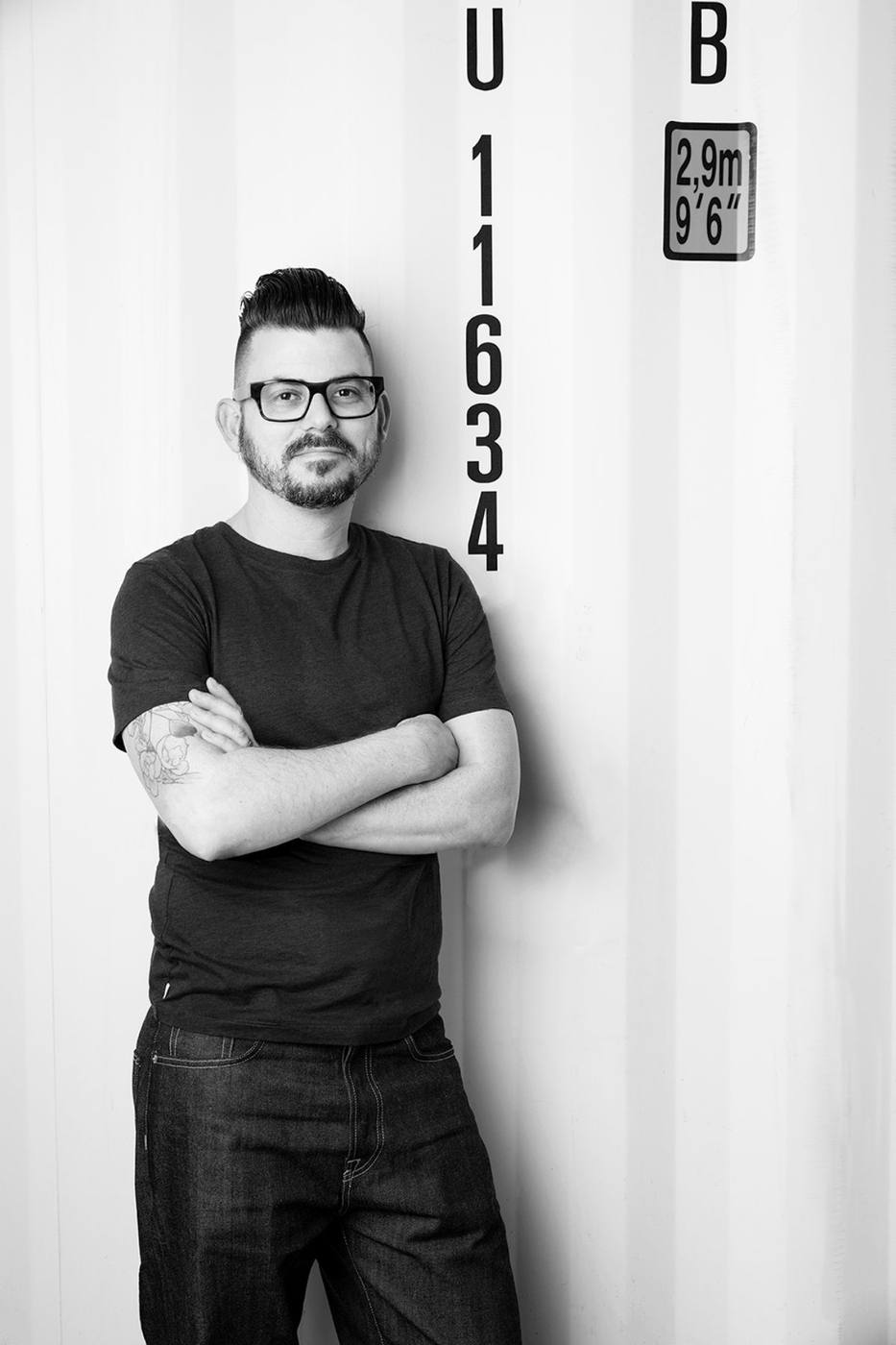
THURMAN WISE
Measured Studio
The curious outsider. He asks what every bartender wants to ask — and keeps it grounded, real, accessible.

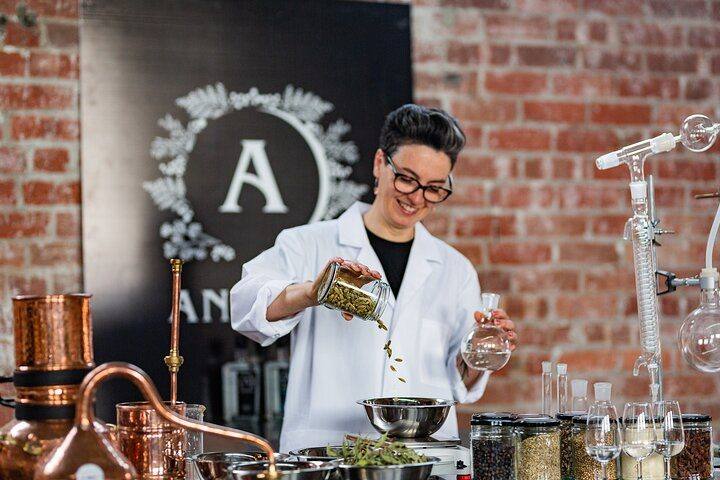
CLARA SANTAERA
Head of Coffee — Grada
The technical brain. Origin travel, direct trade, and turning raw coffee into something people want to drink.
EPISODE 01
THE LEGEND OF coffee
IN ONE LINE
Sleepless goats, a monastery fire, and the world's first roast.
- From Ethiopian legend through Yemen into global trade.
- The Coffee Belt — the only zone on earth where coffee grows.
- Why GRADA sources from Brazil: chocolate, caramel, nut.
READ THE episode
TRANSCRIPT (AUTO-CAPTIONS, MACHINE-CLEANED). SPEAKERS: THURMAN, CLARA SANTAERA.
Hello everyone, Thurman here from Measured. And over the last 18 years, I've made it my quest to discover the best ingredients and drinks in the spirits industry. From shaking drinks behind the bar to actually producing spirits, I found that the secret is using the best ingredients and gaining the knowledge about what makes them special. So, when it came to coffee liqueur, I knew that I had to learn about coffee. So, of course, we teamed up with GRADA's very own Clara Santaera, their head of coffee, to take us on the journey and teach you how we go from farm to bottle to cocktail.
But I suppose every journey begins with a question. Where did coffee come from? Well, this is one of the most exciting parts about telling the legend of coffee because it started with a goat herder named Kaldi in Ethiopia which is said to be the birthplace of coffee. So he was, you know, herding his goats one day and they start chewing on this cherry and then he notices them notices that they're like incredibly jovial and jumping around and hopping around and he's like what is this magical fruit? So he collected this fruit.
He took it back to his local monastery, presented it to the monks in the monastery and then it is said that the monastery the monks themselves you know they cast the coffee into the fire and that is how it said that the first the first evolution of roasting began and then you know through the monasteries it spread through Yemen. It spread through the Middle East and then the big one, the Roman Empire, really spread it throughout the world.
— Wow. So, we can trace coffee more or less to a single person at a certain time.
— Yeah.
Yeah, we can.
— Are there any countries that challenge this story?
— Well, it's a legend, but we all pretty much agree that Ethiopia is the birthplace of coffee. And then through then they spread it. They spread their seed.
— And you said that the seed did spread. And so where in the world do we find coffee being grown today?
— Well, coffee is known to grow in what we call the coffee belt which is uh the Tropic of Capricorn and the Tropic of Cancer. So that is the coffee belt and it's considered subtropics. Uh and that is the best place to grow coffee and the only place to grow coffee.
Uh and it is considered 23 degrees either side of the equator.
— And for all of us that are not so great with geography, can you toss out a few countries that might exist in the coffee belt? — Yeah, for sure. We've got Latin Americas, Central America. Yeah. Uh we've got Africa, we've got Indonesia, uh and they're, you know, some of the countries we're talking about in that coffee belt.
— And with the regional spread of the coffee belts, do you get different flavours or different styles coming from different parts of the world?
— Yeah, I mean, every country has a different terrain, different soil, different ecosystems. So, you're you're going to get uh you know, maybe you'll get a really floral coffee from Ethiopia, and then you go to Colombia and you're getting something super fruity and funky, and then you go to Brazil and you're stepping into the land of chocolates and nuts. So, yeah, every country has a distinct flavour
— Can you get coffee here in Australia?
— You can. And we find it in Byron Bay and above.
There's some coffee that's grown even in the Daintree Rainforest, but we're not quite there yet with our technology, with our yields, with our processing. We're not a coffee growing country. Like even with altitude, we don't have the altitude. So, I don't think we'll ever be at a position where we can fully buy Australian grown coffee.
— I might be mistaken, but I do believe you guys get your coffee from Brazil. Yes, we do.
We source our coffee from Brazil because we love those really traditional coffee flavours.
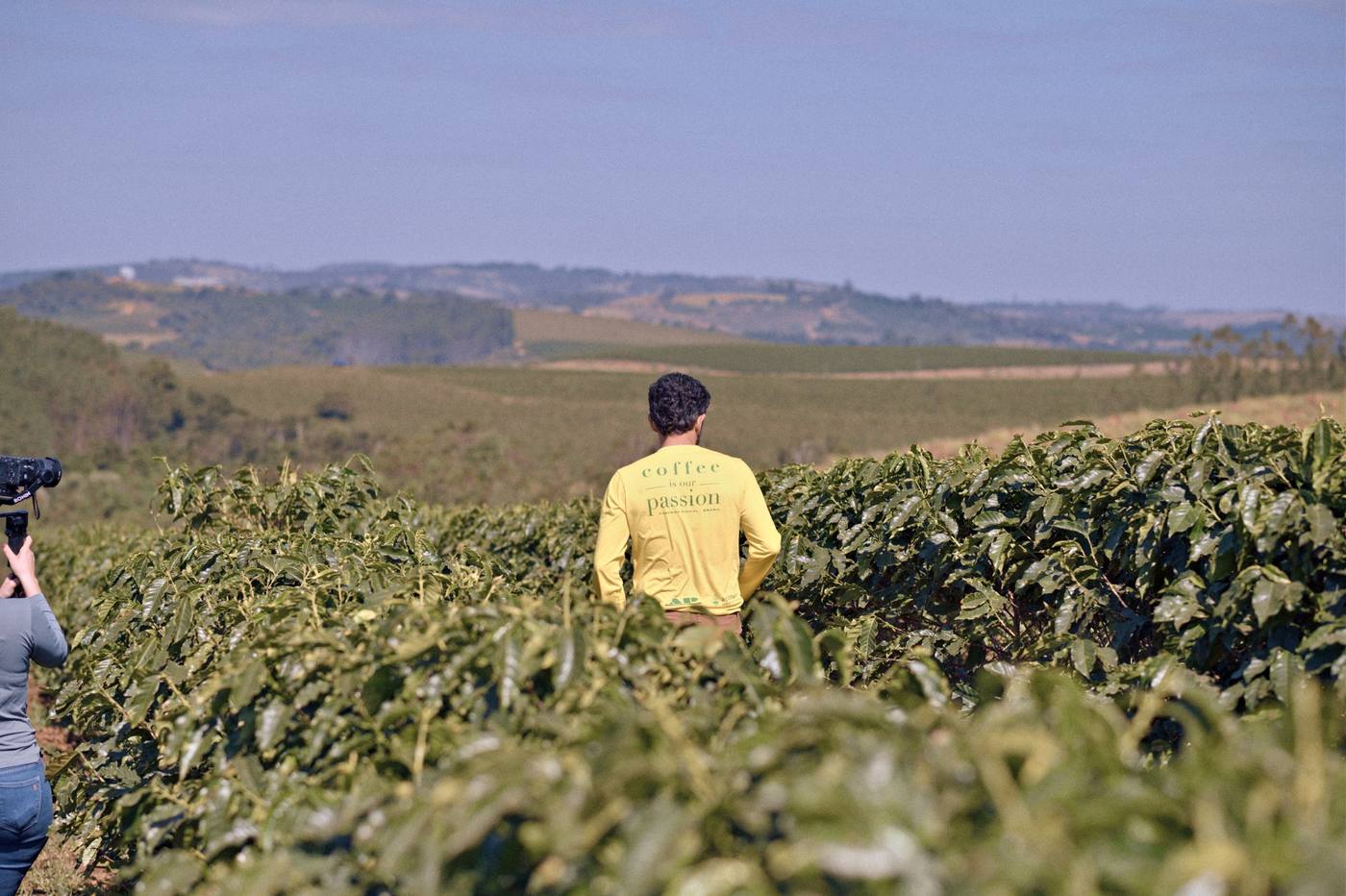
— And can you tell me a little bit more about the farm that you guys or what's the name of the farm? Where do you guys get your coffee from? Well, so just like for an FYI, Brazil is the biggest coffee producing country in the world and it because of that it has such a vast you know variety of different kind of flavour profiles. So we source in the region of Minas Gerais and we source from a sixth-generation coffee farmer named Pedro Gabarra.
— Why why have you guys chosen Brazil? But why have you chosen this farm?
— Yeah, so Brazil because you're always guaranteed the volume with Brazil and you're always guaranteed those traditional coffee flavours that we all know and love. You know, when we think about coffee, whether it's your Nescafé or whether it's your Lavazza from the supermarket, they all carry that traditional coffee flavour, which is like chocolates and caramels and nuts. So it's for the general coffee population.
It's a it's a coffee flavour for everyone. And you know the reasons why we use Pedro and Fazenda Pinhal, which is the farm's name, is because coffee is not just an exchange program. It is built on mutual values and you know we it's more than coffee. It's a connection. It's it's a it's a ritual that we both share together of wanting to be able to connect stories and connect good coffee.
Uh and yeah, it's it just runs a lot deeper than just an exchange and a transaction.
— Obviously, you're a coffee expert. You've done so much in coffee before you are where you are today. What was it about coffee that excited you or you decided to you wanted a career in it?
— I had this idea that once I finished high school I would travel was all I wanted to do but in that I found coffee and coffee blended itself in with that travel aspect and that connection.
I love meeting new people. I love meeting new cultures and you know I was able to be flexible and hybrid with coffee to include not just something that I love doing but something that I love being which is a traveler and so I think those two combinations really elevated my love for coffee. Yeah, I suppose like in a way coffee is one of those ingredients or crops that can really it really does connect the world not just from an economic standpoint but you know it's something you can share with each
— Yeah. I mean coffee is a ritual. It's it's what gets us up in the morning.
It's what connects us after a lunch on a Sunday at our nonna's house. You know it's something that's been connecting people for centuries. And that connection is what I love most about it.
— Well, I'm excited to learn more.
— Yeah, let's get stuck into it.
— Sounds good.
 PLAYING FOR THE BOTTLE?0/14
QUESTION 1 OF 2
According to legend, who discovered coffee?
QUESTION 2 OF 2
Coffee only grows commercially inside the Coffee Belt. Where does it sit?
EPISODE 02
CHEERS TO THE harvest
IN ONE LINE
A coffee farm is a living ecosystem, not a factory.
- Specialty and commodity are two different systems, built for different jobs.
- A tree takes around two and a half years to bear its first proper harvest.
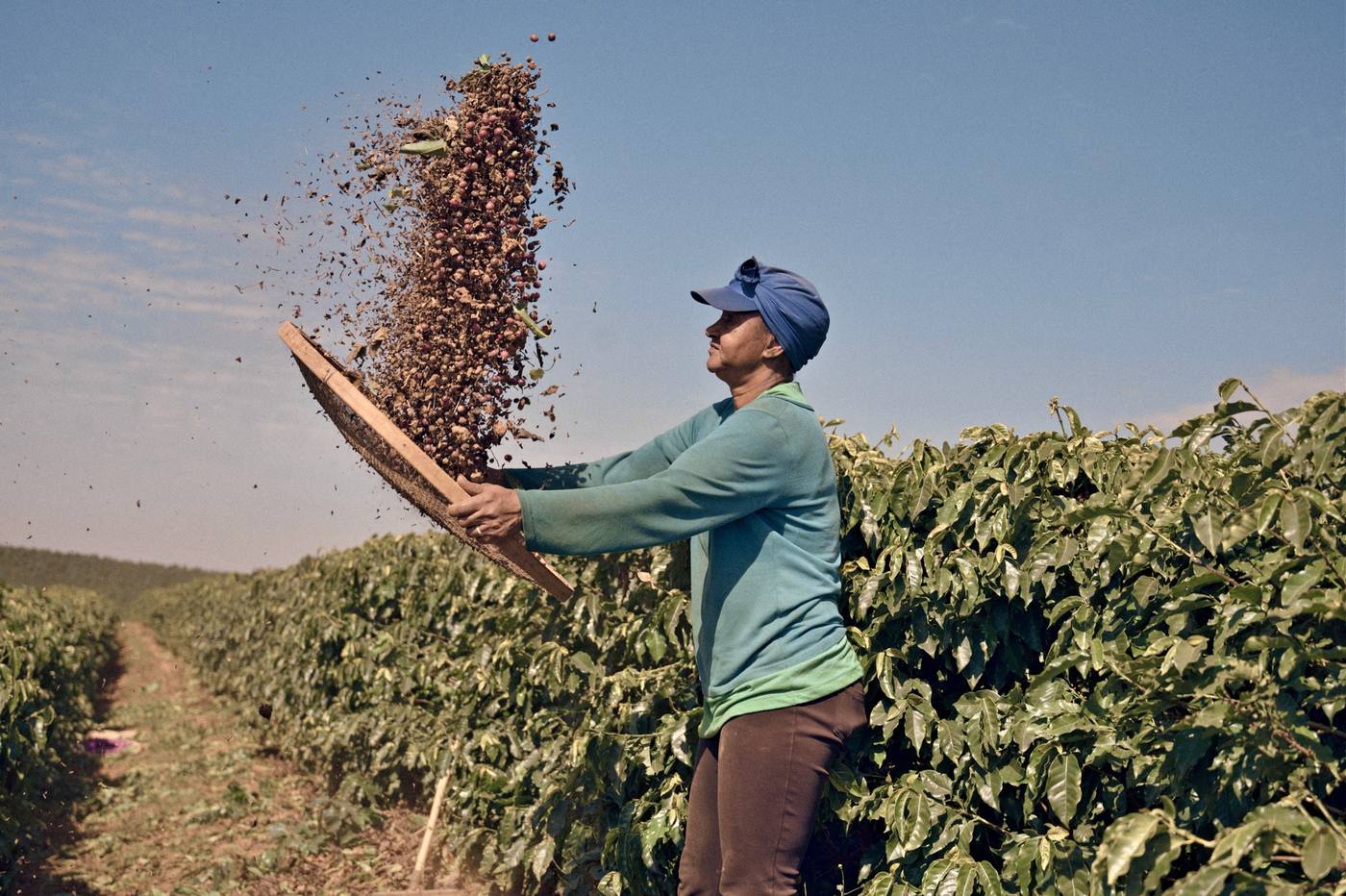
- Hand-picked, tree by tree — human effort at every stage.
READ THE episode
TRANSCRIPT (AUTO-CAPTIONS, MACHINE-CLEANED). SPEAKERS: THURMAN, CLARA SANTAERA.
Hello everyone, Thurman here from Measured. I've made it my quest to discover the best ingredients and drinks in the spirits industry. So, of course, we teamed up with GRADA's very own Clara Santaera, their head of coffee, to take us on the journey and teach you how we go from farm to bottle to cocktail. Like all great spirits, the best ingredients come from well-managed farms. So, what makes a coffee farm so special? — Well, Thurman, a farm, as you see, isn't just an ordinary crop.
It's an ecosystem, and it requires commitment and dedication, and it depends on where it's grown, the altitude, the climate, the soil, biodiversity, and the people who tend to it. It is a collaborative effort to create a specialty coffee farm. How many people are required to bring a crop to life?
— Well, if you're not fortunate to have land that can have machines, you need people. And for a big plot, like somewhere between 800 and 900 hectares, you're looking at about 90 to 110 people who are required to hand-pick coffee for the harvest season.
— So, are there different types of coffee? — Yeah. So, we have specialty and commodity. Specialty goes quality over quantity. They invest in the staff. They invest in technology, biodiversity, sustainability.
They generally have direct partnerships around the world. So they will have coffee traders who have a direct partnership with them. Commodity is faceless, nameless, quantity. It's all about how much can we get out there and how cheap can we get it?
— I obviously there must be the difference in the quality, but is specialty coffee that much better?
— Well, it just depends who you talk to, but in my opinion, specialty coffee is a whole other level of commitment. It is a way of life. It is a ritual. These farmers, these producers, these workers wake up living and breathing with coffee in their blood. Whereas commodity might be just another job for the farmer.
You know, they don't want all that commitment or hard work. They just need to put food on the table for their families, which isn't necessarily a bad thing. And that's why commodity and specialty have their place. So, it's not really um
— it's not as easy as better.
— No, it's not.
It's a much more nuanced conversation and we can't judge the farmers that choose to do commodity because it might be for reasons that we don't understand. But you will get a better cup of coffee from a specialty coffee farm.
— True. And I suppose on the commodity side, it offers affordable coffee to people that might not necessarily be able to have specialty coffee.
— Exactly.
You know, specialty coffee is a privilege, and not everyone can afford to indulge in that privilege. So I respect coffee in all forms, but I want to invest and evolve in the craft. I want specialty coffee to stay alive and be around in the next 10 years. So that's why it's important for us to invest in specialty coffee so we're not just left with commodity.
— So this is perhaps an ignorant question.
— No such thing as a silly question. That's what I like to hear. What does coffee grow on? Is it like a vine? Is it a bush?
Is it a tree?
— It's a tree much like the one behind us. You know, this is probably the average size of a coffee tree.
— Handpicked from a tree.
— Handpicked from a tree
— And how long does it take for a tree to reach its full maturity?
— Well, it's insane. It takes 2 and 1/2 years for a coffee tree to grow to full maturity. And that's already a commitment in itself.
— And what's the yield like? Is it like every season a tree can produce or does it need to rest?
— So a coffee tree requires a huge amount of energy from the sun, water, biodiversity. So the yielding is every second season is a good yield. So you'll get a low-yielding season one year and a high yielding season the next year. So on coffee farms essentially half their crop yields one year, half the crop yields the next.
— Correct. Yeah.
— A second.
— Yeah. And that's why it's such a commitment to grow specialty coffee because these farmers have to juggle plots. So that plot is grown at a different time to this plot. So that plot will be the high yielding season one year and the low yielding season
— So I now know coffee comes from trees.
It's a complex process, lots of time and energy. You've mentioned hand-harvesting, you've mentioned commercial farms. Can you tell me a little bit more about the differences and types of harvesting and how coffee is harvested from the tree?
— Yeah, so handpicking is the biggest form of harvesting. Brazil has mechanical harvesting because their terrain is a little bit more like of rolling hills, not steep mountains where you can't have machinery or tractors.
So, they're the two main forms of harvesting, mechanical or hand-picked. — And how long does a harvest typically last? — Well, in Brazil, harvest season starts in May and ends at the end of August.
— Oh, wow. Yeah,
— it's a long harvest, and it's done when all the cherries are gone.
— It's just like so crazy for me to think that coffee, which I think is the third most consumed beverage in the world behind water and tea. It's just kind of hard for me to wrap my head around the amount of time and energy it requires to handpick all those beans that are consumed every day.
It's like it makes me have a new appreciation for like when you get that little pack of like a hundred beans to know that each of those probably has been hand-harvested.
— Yeah. Yeah. And and that's what we want to do. We we want to connect people more to the process to the people and that it's not just a disposable product that you find on the shelf.
It it has a whole different life before it gets to you. — Yeah. And just to even know that like there's a person with a name that's it's starting the journey there is really
— Yeah, exactly.
— Cheers to the harvest.
PLAYING FOR THE BOTTLE?0/14
How long does a coffee tree take to reach maturity?
EPISODE 03
BEFORE THE bean
IN ONE LINE
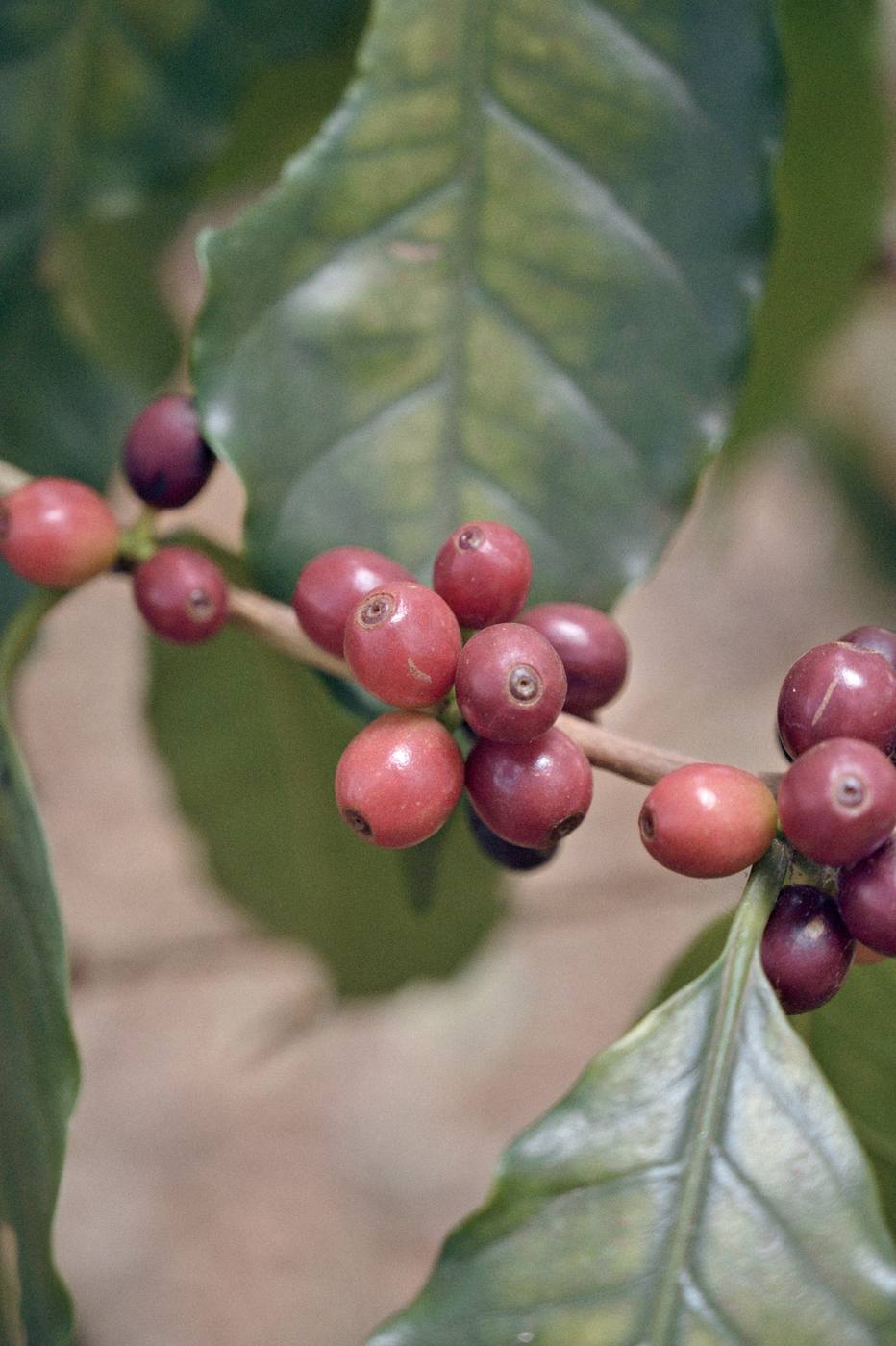
Coffee is a fruit. The bean is a seed inside a cherry.
- The cherry's skin becomes cascara, a drinkable by-product.
- Arabica vs Robusta — and why Arabica owns specialty.
- GRADA grows Yellow Topaz and Mundo Novo, for body and sweetness.
READ THE episode
TRANSCRIPT (AUTO-CAPTIONS, MACHINE-CLEANED). SPEAKERS: THURMAN, CLARA SANTAERA.
Hello everyone, Thurman here from Measured. I've made it my quest to discover the best ingredients and drinks in the spirits industry. So, of course, we teamed up with GRADA's very own Clara Santaera, their head of coffee, to take us on the journey and teach you how we go from farm to bottle to cocktail. So, in the last episode, um, we were introduced to the coffee cherry. And I've actually been able to go to a coffee farm in El Salvador, and I got to taste these beautiful pieces of fruit.
— Much like the goat.
— Much like the goat. Yes. And I was dancing around and everyone thought I was crazy. And I asked the farmers about like, "How can I get these cherries?" And apparently it's impossible to get them fresh.
But I understand you brought us a little gift to try.
— Yes. So, we couldn't get any fresh cherries today, but we do have the dried husk of the cherry, which is the outside of the cherry. So, let's lay them out here. So, this is what comes off when in the process of it.
This is the skin of the cherry. It's called cascara. And we can make a lovely tea from it.
— And is there caffeine? Yes, there's a very small caffeine content in the husk of the cherry.
— And I know that we're about to try it, but does it
— what's the flavour?
— It's very aromatic, very similar to like a blossom tea, I would say. Yeah.
— And you mentioned that this was the skin of the cherry. So, for coffee, what part of the cherry is it that we're actually consuming?
Well, funny enough, we are consuming what we call the bean, but it's actually the seed of the coffee that we're consuming. So, once the cherries are, you know, depulped and processed, etc., we end up with the seed and that is what we're consuming.
— The bean.
— The bean
— the bean that we know and love is actually a seed.
— Amazing. And is that where I suppose the majority of caffeine Yeah.
— Yeah. So the seed holds a majority of the caffeine.
— And are there different types of
— Yeah. So there are different types of cherries. We have red and yellow cherries, each having their own differences.
Uh yellow is usually associated with being a bit more sweeter and maybe a little bit like more of that chocolatey vibe that we get. Red acidity, fruity. And within the red and yellow, are there different varieties as well?
— Yeah. So we have two main varieties like the head of coffee, which is Arabica and Robusta.
Arabica has over 100 different species that live within the Arabica family. So we have Catuai, Geisha, Arara, Bourbon, those belong to the Arabica family. But Robusta is a standalone variety. No other no other species live within Robusta.
— And the main difference between
— well you've got a lot more acidity, vibrancy, complexity in Arabica.
It usually grows in higher altitudes. There's usually a little bit more um care tended to some species of Arabica. Robusta grows in low altitude and is very earthy and very, like, toasty and we usually don't get a pleasant cup when we just drink Robusta. It actually if you have a cup of Robusta on its own can actually make your stomach really upset. It's really strong.
It's really intense, high in caffeine and you don't need high altitude to grow it. Therefore, it's lower quality. Do the varieties grow all over the world or do certain varieties tend to stick to certain regions?
— All of these coffee varieties grow in what we call the coffee belt. Uh, but Robusta is known to grow in India, Indonesia, and the biggest robusta growing country is Vietnam.
— Should we take a quick little
— Let's have a little tea.
Whoa. That's like It's so cherry.
— Berry like so fruity.
— Yeah. It's really
— And like naturally sweet.
— Damn. I might be a cascara.
— We've changed to cascara now.
— Done. Coffee.
You're out. So, this is the skin. We get the seed. What about the meat of the cherry?
— No.
The the mucilage is washed out. Yeah. In in the processing. Yeah. What type of cherries does GRADA use?
— So we use a Yellow Topaz and a Mundo Novo. So the Yellow Topaz is naturally processed and the Mundo Novo is a is what we call a pulp natural process.
— And why do you choose those two?
— Because a natural one gives it that body that we're looking for and that roundness and the pulp natural gives it the sweetness. So, it's a perfect
— Cheers. Can't wait
— to your new found love of cascara.
— Love of cascara. And I can't wait to hear about the seeds.
PLAYING FOR THE BOTTLE?0/14
QUESTION 1 OF 2
The coffee “bean” is actually a…
QUESTION 2 OF 2
What is cascara?
EPISODE 04
BEFORE THE roast
IN ONE LINE
Processing separates seed from fruit — and sets the flavour.
- Washed is clean and bright. Natural is sweet and full-bodied.
- GRADA uses natural and pulp natural to build sweetness and body.
- From mill to Australia: months, not weeks.
READ THE episode
TRANSCRIPT (AUTO-CAPTIONS, MACHINE-CLEANED). SPEAKERS: THURMAN, CLARA SANTAERA.
Hello everyone, Thurman here from Measured. I've made it my quest to discover the best ingredients and drinks in the spirits industry. So, of course, we teamed up with GRADA's very own Clara Santaera, their head of coffee, to take us on the journey and teach you how we go from farm to bottle to cocktail. So, we've talked a little bit about the skin of the cherry. We've talked a little bit about the seed. Do you mind telling us a little bit about how we remove the cherry and get the seed?
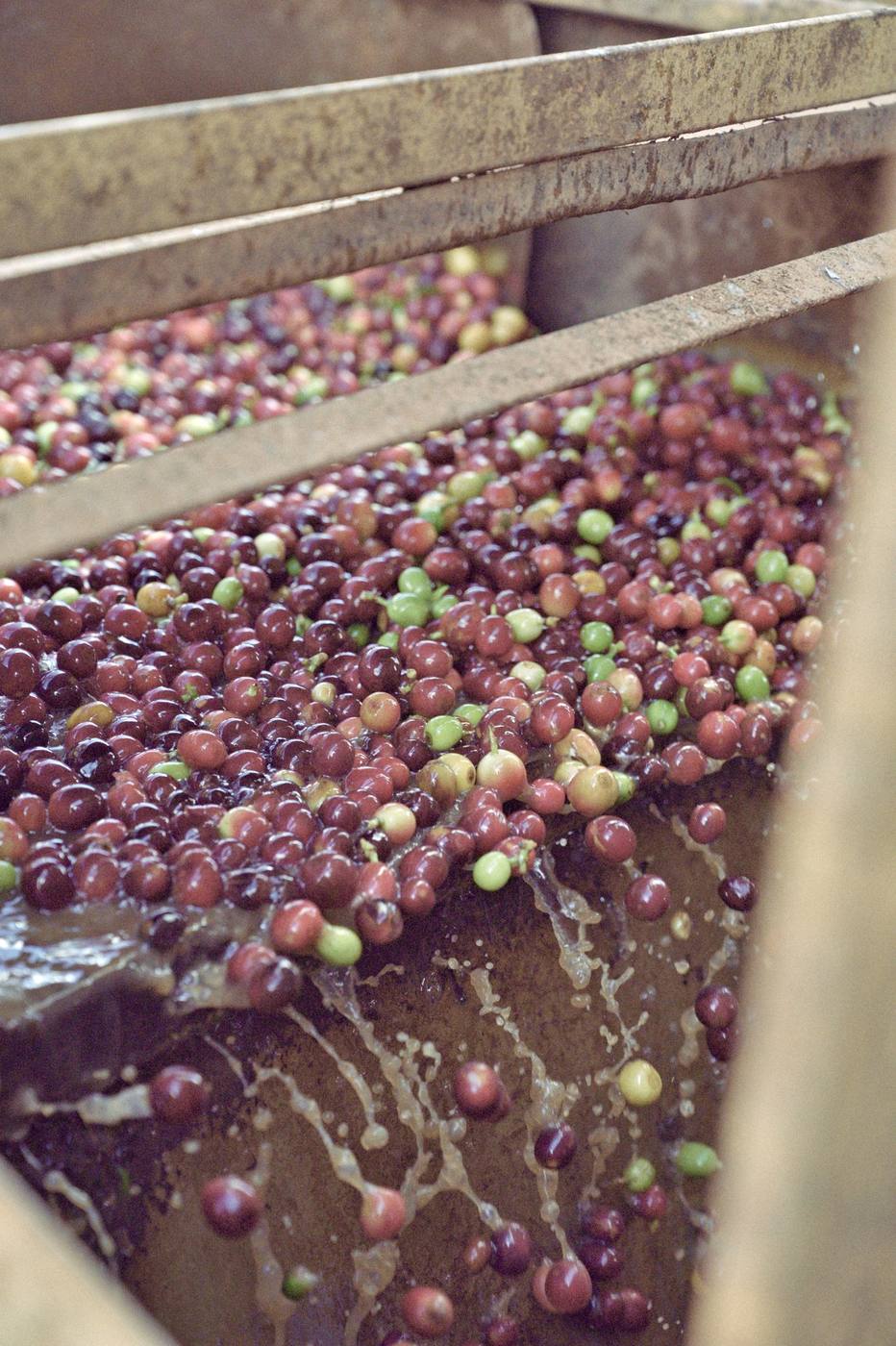
— Yeah. So, from the cascara that we see lives this little seed, but we need processing to uh unravel the seed. So, we have three main processes in coffee. So, we have the most common is washed. So washed is removing the skin with water and then it goes through a washing station and also removes the mucilage.
Then it gets put onto raised beds or a patio to dry. The second most popular natural is coffee as the cherry as it is spread out onto raised beds or patios drying by naturally by the sun raking it to you know um rotate the cherry so it doesn't ferment and that's natural. The last one which is not so popular is somewhere in between washed and natural. It's called semi-washed pulp natural or honey process. So this process begins at a washing station, removes the outer layer of the cherry.
Uh and then it's spread out onto a patio and dried with the mucilage. So it kind of looks sticky like honey. And those are the three main processes.
— And how does that affect flavour of what you get?
— Yeah.
So wash you get like bright and acidic clean a very clean cup. Natural you're getting more of a like fullbodied sweet rounded coffee. And a pulp natural or honey is really somewhere in between. You're getting that cleanliness from the from the washing but also that sweetness from the honey. And I can actually taste like that honey sweetness to it.
Yeah.
— What type of process do you guys use at GRADA?
— So we use a natural and a pulp natural. So we want to get that sweetness from the pulp natural but the body that carries in the liqueur.
— And roughly how long does it take to go from cherry
— to bean?
Well, that whole process including resting time can take anywhere between 60 to 90 days.
— Yeah. So the coffee needs time to either go through the washing station or dry on the patios. And then you need to put it through a milling and then you have to like let it sit in silos for 30 days before it can be shipped off.
— Crazy.
I mean, who would have thought those little cherries takes so long to get to the seed?
— Yeah. And it doesn't end there. You know, Australia being so far away from the rest of the world. It takes two and a half to three months to get to us.
So, it's a long process indeed.
— Sometimes the best things are worth the wait, though. So, now we know how to get the bean or the seed.
— The seed.
— Next up, let's get to the roast.
Let's do it.
PLAYING FOR THE BOTTLE?0/14
Which of these is NOT one of the three main processing methods?
EPISODE 05
THE roast
IN ONE LINE
Roasting is where potential becomes flavour.
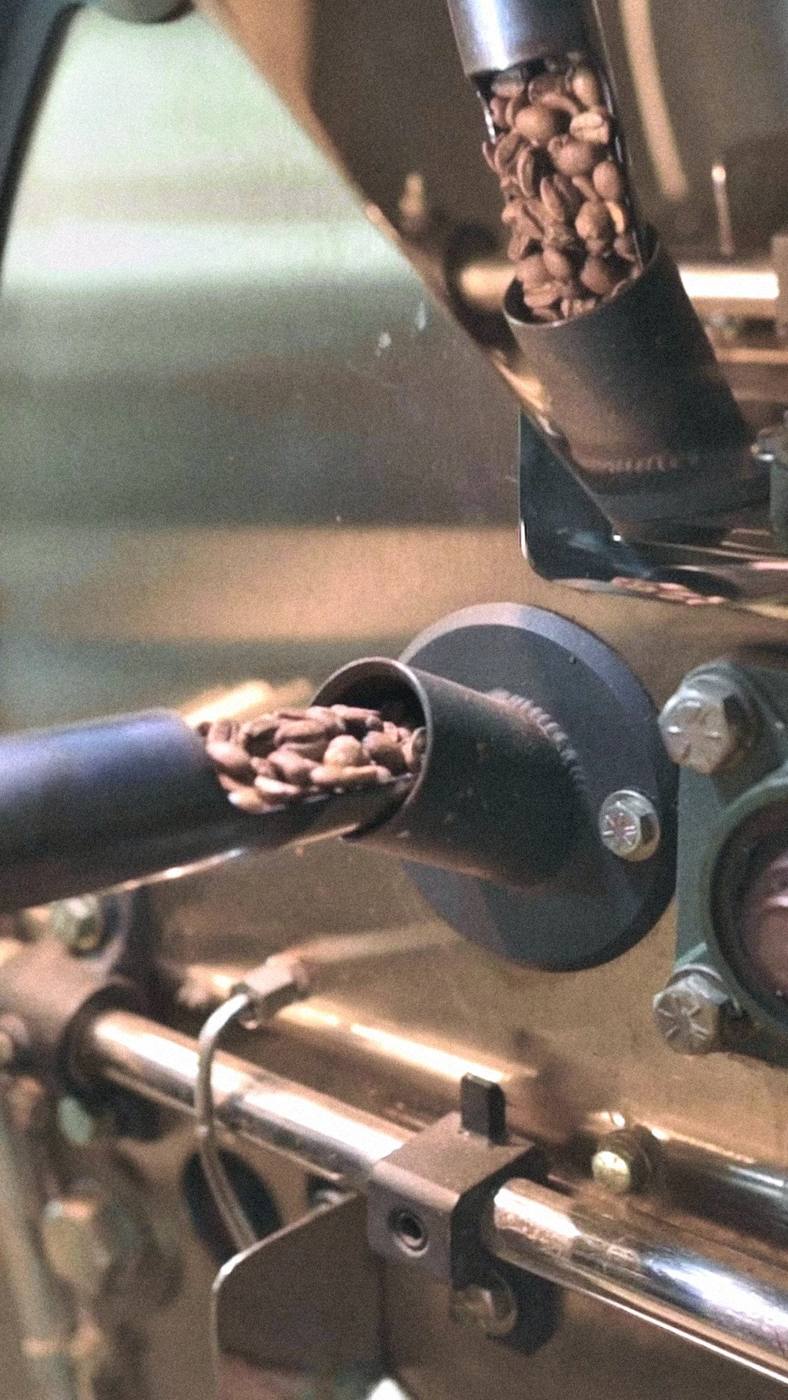
- Green to yellow, caramelisation, first crack.
- Light suits filter. Medium suits espresso. Dark built the Italian tradition.
- GRADA roasts medium — sweetness and acidity, with body for cocktails.
READ THE episode
TRANSCRIPT (AUTO-CAPTIONS, MACHINE-CLEANED). SPEAKERS: THURMAN, CLARA SANTAERA.
Hello everyone, Thurman here from Measured. I've made it my quest to discover the best ingredients and drinks in the spirits industry. So, of course, we teamed up with GRADA's very own Clara Santaera, their head of coffee, to take us on the journey and teach you how we go from farm to bottle to cocktail. So, now it's time to talk about the roasted bean. It's probably the form of coffee you're most familiar with. And if you've been following along, you'll understand how much time and work it's taken to get to this point.
So, Clara, why do we roast a bean? Well, Thurman, after describing the whole rigorous process of what it takes to get a processed bean, we now want to get all those flavours out that I've been talking about, that complexity, acidity, body, and that's what the roast roasting process is going to help us do. It's going to help us release those aromatic flavours into a roasted
— So, do you mind giving us a little bit more technical understanding of the roasting process? Sure. So, we're looking for three main I would say events in the roast that are really important and that's colour change, caramelisation (the Maillard reaction), and first crack.
So, the coffee gets dumped, it drops in temperature, and then we need to look for it to come back up. So, the temperature rising. So, all of that cold coffee has cooled down the barrel of the roaster, but eventually it'll heat back up. And so as it's coming back up, we look for colour change. And that's when the bean goes from green to yellow.
And you actually smell it as well. The colour change. It smells kind of like hay or grass. And so that's the first event that we look for. Now, in between colour change and crack, we have caramelisation.
So that's when all the sugars are developing. And that is a really important part, too. And you want it to be controlled. You don't want it to happen too quickly because you can bake the coffee which looks cooked on the outside but it hasn't developed on the inside. So it's really important that we control the temperature up to first crack in that caramelisation period.
And then the third and last one is first crack, that popcorn sound that we hear when we're roasting coffee. And the coffee is telling you that all the moisture that it can possibly get rid of has been popped out. And so they're the three main events that we look for in a roast and what makes a roasting profile.
— And when it comes to roasting, um I guess I feel at least I'm familiar with the ideas of light, medium, and dark. What what does those differences in roast mean — Yeah.
So you've mentioned the three roasting profiles that we're quite familiar with. So the first one is a light roast and it's what we use for filter coffee. So the pourover batch brew or the Moccamaster, AeroPress but those are what we consider filter roasts and it we want to keep them as light and as acidic as we can and that just preserves more of the acidic flavours and the fruity flavours so you can get that tea-like structure when you're drinking a filter coffee. But then we move on to medium and then we're getting into the espresso roasts the category of espresso roasts. So, medium roasts are what most cafes would use, what most specialty cafes would use, because you haven't quite roasted it too much where it's toasty and too fullbodied and overwhelmingly strong in its presence in your on your palate, but you haven't quite underroasted it where you've got you've got those overwhelmingly acidic flavours coming through.
So, you've hit a sweet spot. And then we go to dark roast. And that's what is more associated with the Italian kind of style espresso of what like the Italians brought into the Australian coffee culture in the '70s. That kind of really bitter, strong, potent like
— And what recipe do you guys use for GRADA? What type of roast?
— Yeah, so we're using that medium roast. So we're we want to hit that sweet spot of sweetness, a little bit of acidity, not too much, but and that body that carries through GRADA.
— So I've actually done a little GRADA and tonic, which I think those notes pair so perfectly with the bitterness and sweetness of tonic.
— Yeah. I mean the GRADA and tonic is inspired by a coffee we came up with a few summers back where we would add filter coffee with tonic
— and we're like wow this is delicious.
So of course GRADA and tonic it just makes sense.
— Cheers to the roasts.
— It's so good. And stay tuned for the next episode where we talk about the grind.
PLAYING FOR THE BOTTLE?0/14
QUESTION 1 OF 2
What is “first crack”?
QUESTION 2 OF 2
What roast profile does GRADA use, and why?
EPISODE 06
THE grind
IN ONE LINE
Grinding is where extraction begins — and freshness starts running out.
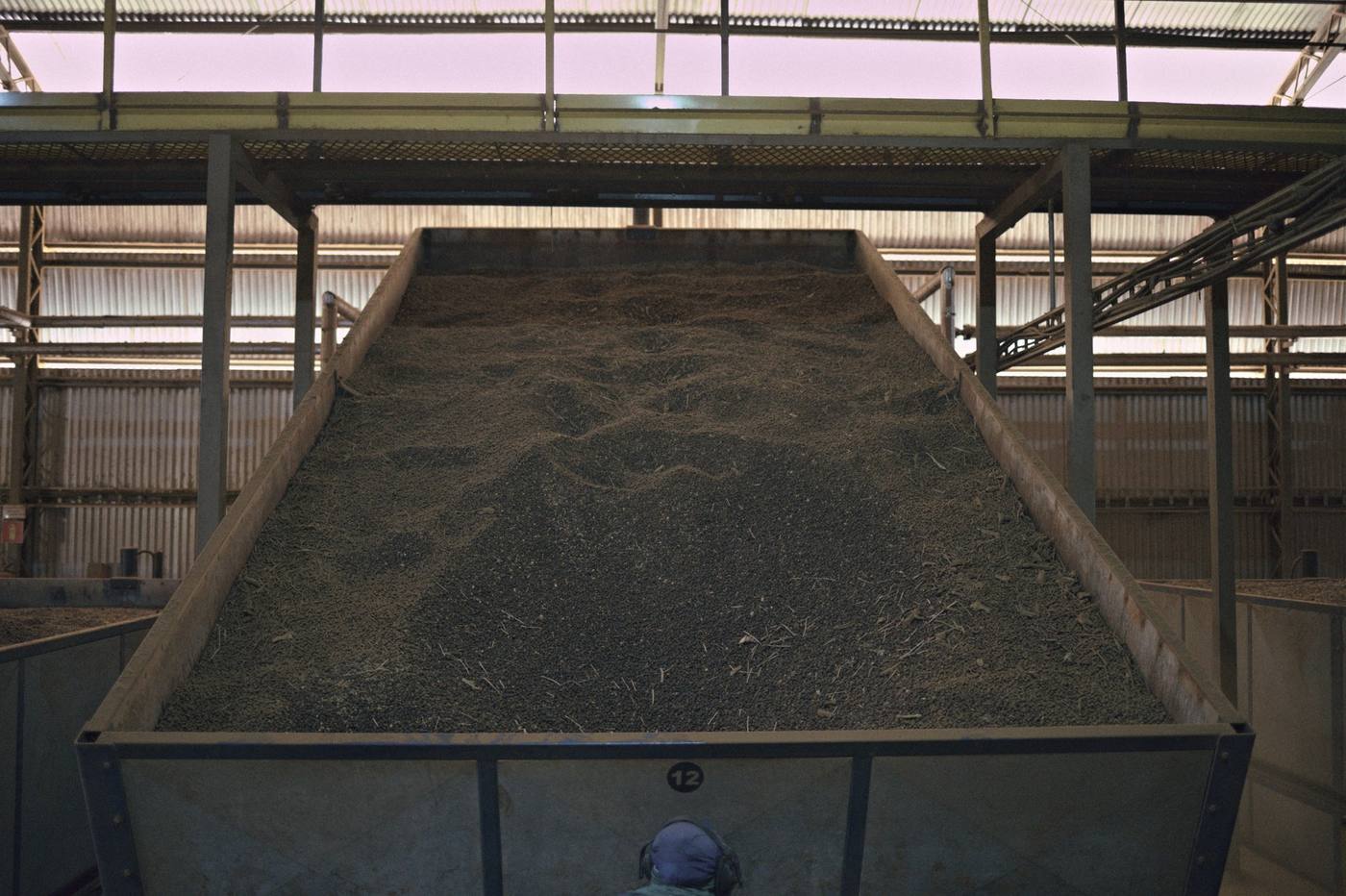
- Ground coffee stales fast. Cafes grind per order.
- Grind matches method: fine for espresso, coarse for press.
- GRADA grinds between filter and espresso, for balance.
READ THE episode
TRANSCRIPT (AUTO-CAPTIONS, MACHINE-CLEANED). SPEAKERS: THURMAN, CLARA SANTAERA.
Hello everyone, Thurman here from Measured. I've made it my quest to discover the best ingredients and drinks in the spirits industry. So, of course, we teamed up with GRADA's very own Clara Santaera, their head of coffee, to take us on the journey and teach you how we go from farm to bottle to cocktail. And now we get to the grind. And I must say, I wish I knew a little bit more about ground coffee in the past.
For a number of years, I've run bars and played with spirits and flavours, and I've always been attracted to coffee.
— However, I've always thought it was good enough to just infuse using the whole bean. And I've created some amazing products with that. But now just kicking myself thinking,
— what if I just
— grind it? Grind it.
— What if I just use the grind?
— So with that in mind, do you mind telling us just a little bit about why we grind coffee?
— We grind coffee. And I'll give you an example. We'll we'll we'll use my old school hand grinder.
Like we have to grind coffee to release those aromatics that we were talking about. And ground coffee has more surface area. So you've got the ability to saturate it and wet it. Whereas like if you're infusing a whole coffee bean, you might be you might be keeping it there for quite a few days to get any coffee flavour from it, you know,
— at least 24 hours.
— So like this is going to grind the coffee into the into the powder that we know that we can use with hot or cold water.
Yeah. So now we have the powder.
— And wow, it's so it's so amazing just the freshness that comes from it.
— Yeah. Like you want to grind as you go.
Roasted coffee is best kept fresh as whole beans. That's why when you're at a cafe, a barista is going to grind per order because they want you to have the freshest cup of coffee.
— So you should grind as you go. You should grind as you go because ground coffee has a shorter shelf life. It it gets stale.
So you want to keep your whole beans in an airtight container and in a cool place in your kitchen. — Another thing that I guess one of the themes that have come up throughout our time together is consistency. Consistency. Consistency. How does grinding the coffee contribute to consistency? Well, each type of coffee has its own grind setting.
So, espresso is fine. Filter, you know, it's coarse-ish. Then you like got your French press, which is the most coarse that you can get. So, consistently hitting those grind sizes for your depending on how you're brewing it is the key to a really good brew.
— And what do you guys use at GRADA?
So, we use like a filter in between a filter not like espresso, but you're getting into the home espresso kind of grind. Um, commercial espresso is really fine, whereas home espressos are not so on that extremely fine size. But yeah, we're we're in between. We're not using like a pourover grind size, but we're not using an espresso grind size. Well, I suppose now that we've learned about the grind, we should probably get to the good stuff.
Hot extraction.
— Yeah, the good stuff.
PLAYING FOR THE BOTTLE?0/14
Why is coffee ground before brewing?
EPISODE 07
THE extraction
IN ONE LINE
Hot and cold extraction aren't temperatures. They're different structures.
- Hot (92–100°): body, complexity, a finish that lingers.
- Cold is passive: softer, flatter, shorter.
- Crema needs hot extraction. GRADA hot-extracts deliberately.
READ THE episode
TRANSCRIPT (AUTO-CAPTIONS, MACHINE-CLEANED). SPEAKERS: THURMAN, CLARA SANTAERA.
Hello everyone, Thurman here from Measured. I've made it my quest to discover the best ingredients and drinks in the spirits industry. So of course, we teamed up with GRADA's very own Clara Santaera, their head of coffee, to take us on the journey and teach you how we go from farm to bottle to cocktail. we've talked enough about this beautiful little bean, everything from farm to cherry, cherry to bean, bean to grind. But now I want to learn more about extraction.
Yeah.
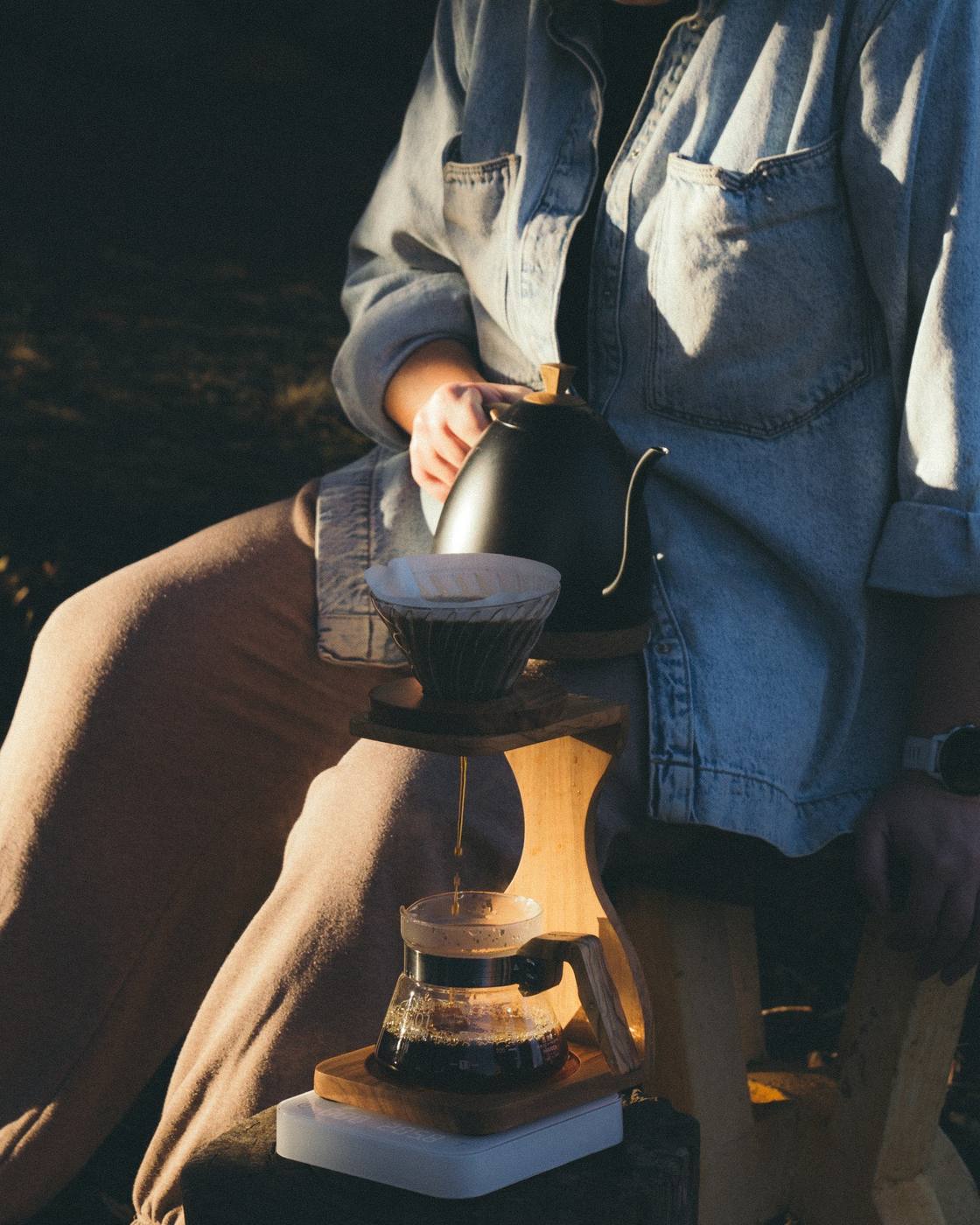
— Can you tell me a little bit more about extraction and hot extraction? Sure. So, this is a hot extraction device here. Shall we make it?
Um so, hot extraction uses hot water to extract the coffee, the aromatic, the flavours. Uh and that's the process we're going to do today. And we're going to do a bit of a Brazilian style. They don't measure, they don't weigh. We're just going to go We're going to use some coffee by our roasters, Criteria.
And let's start, shall we? So as the hot water is going through, that's basically what's releasing the flavour. — So yeah, we're going to use a controlled temperature around 92°, which is perfect for hot extraction filter. And we use around 92° to 95° for Grotto. So it's not too far off from ours. And with hot extraction, obviously you're making a few cups now, but is this something that you guys scale up you can scale up in large batches?
— Yeah.
So, it's a little differently than this. So, the coffee goes in first. There's controlled water temperature, 92° to 95°. And then you need to agitate it. So, hot extraction requires agitation.
Whereas if you use it in a cold brew, you just, you know, put it in the filter, put in the cold water, put in the fridge. Um but because you want the flavour to be balanced and you want it to extract you know, as equally as you as you can, then agitation is required. And in terms of obviously hot extraction is hot water, cold brew or cold extraction uses water in colder temperatures. Is there a big difference between the flavour profiles that you get between the two? Yeah, for sure.
So, with cold brew, you're always going to get a thin body. The hot water allows it to you're extracting the in a short amount of time and you have the ability to extract the body, the sweetness, the acidity, whereas cold brew is very mellow. You're not going to get the body, it's going to be thin. I suppose it's great for people who don't really like that strong that coffee flavour, that traditional coffee flavour. Cold brew it was introduced for people who didn't really like coffee.
And then it's kind of oh, I like coffee now. Like it's mellow, it's thin, it's sweet. And is that why when I at home make an espresso martini, I'll sometimes for ease use cold brew coffee, is that why you don't get that bit of froth at the top of your espresso martini from a cold brew? Yeah. Uh hot extraction has more body.
So, you're going to get a lot more crema is what we consider it. Crema. Yeah, so that's what you're going to get from a hot brew that you will never get from a cold brew unless you add additives to it to get that crema, but hot brew like it you like you see it in an in an espresso. When you extract the espresso, you look for the golden crema. When you look to shake an espresso martini, you look for that beautiful crema on it as well.
And you've just got to add too many elements to uh do that with a cold brew to lift and elevate to what you want to get in an espresso martini. And in the hot extraction space, you mentioned 92° is that typically the temperature across batch brew espresso machines and different forms of coffee or do they work with different temperatures? Espresso machines work with different temperatures. They they're a bit higher. So, I would say they're like 96 to 100°.
But, you know, filter coffee, batch brew, pour over, Aeropress, we're generally working all with the same temperature. We don't want it to be too hot cuz that's when you can get that bitter unpleasant flavours. It has to be a really controlled mellow-ish temperature to allow the coffee to extract to perfection. Cheers. Cheers.
Nice. Nice. So, when you're tasting a coffee, are there traditional flavours that you should be expecting to find? It depends on what process, what variety, and what country you're you're tasting. First, we will smell it on the nose.
It's quite soft. Yeah. It's like quite blossom-y and fruity. But, then it's got that caramel chocolate-y notes behind it that you like we often find in GRADA on the nose as well. So, it's got like certain similarities there.
So, let's taste it now. I just want to taste it against the GRADA. It's crazy the mouth the similarity in the mouth feel that you get. Like, even though that's obviously cold, this is There's just something happening on the tongue that I don't know exactly how to explain, but Yeah, and that's the hot extraction method, you know, like when you're having a cold brewed coffee liqueur, it has a very short lifespan on your palate. It dissipates quickly. Whereas, a hot brewed coffee liqueur, it will remain on your on your palate.
It'll have a lingering aftertaste and stay there, you know, for you know, a little few more seconds more than a cold brew will. It's wild. It honestly feels like it's kind of almost dancing from the middle of my tongue outward. Yes. It's really, really nice.
So now you understand the difference between hot brew and cold brew and the reasons why we use hot brew, why don't we talk about how we incorporate that into liqueur. I'm ready. Cool.
PLAYING FOR THE BOTTLE?0/14
What does hot extraction create that cold brew cannot (without additives)?
EPISODE 08
THE taste
IN ONE LINE
Everything from cherry to extraction reveals itself in the glass.
- Dark cherry on the nose; tiramisu and brownie on the palate.
- Nothing added — the sweetness comes from the coffee itself.
- Closes with the Cafe Negroni: GRADA, gin, Campari, orange peel.
READ THE episode
TRANSCRIPT (AUTO-CAPTIONS, MACHINE-CLEANED). SPEAKERS: THURMAN, CLARA SANTAERA.
Hello everyone, Thurman here from Measured. I've made it my quest to discover the best ingredients and drinks in the spirits industry. So, of course, we teamed up with GRADA's very own Clara Santaera, their head of coffee, to take us on the journey and teach you how we go from farm to bottle to cocktail. And now it's the moment I've been waiting for, the taste of GRADA coffee liqueur. — Yeah. So, let's put all of our knowledge into practice.
Eh,
— you can just tell even from when you're pouring it, it's a lot less viscous than I expected.
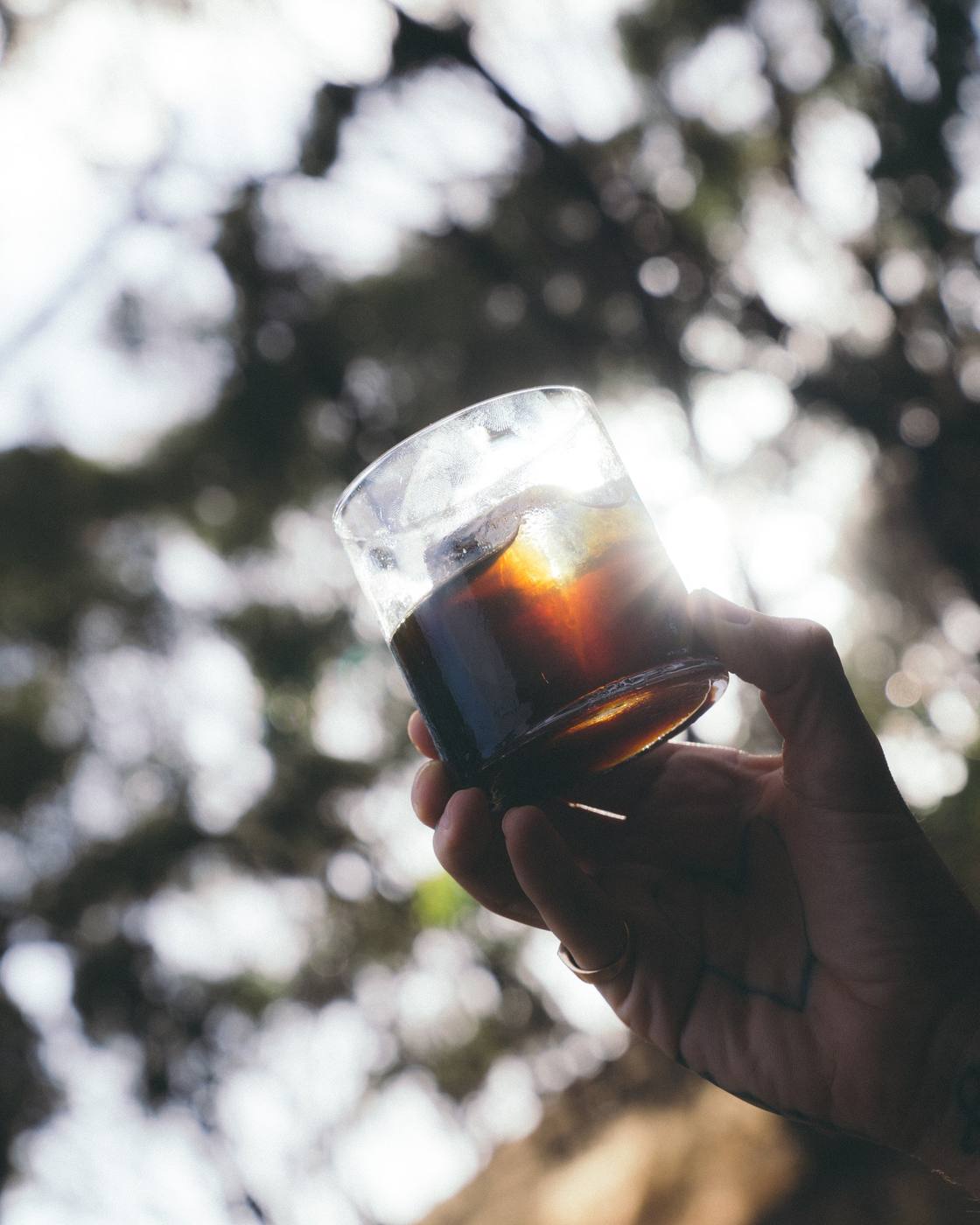
— Yeah, it kind of sits like between a filter coffee. Like when you when you're looking through it, when you look through it with light, it looks like a Oh, that like a filter coffee.
— And when you hear the word, at least for me, when I hear the word liqueur, I often think really thick, very sweet. I'm guessing this is going to be a lot lighter on the palate.
— Yeah. You know, because of the process we use and the coffee we use, the coffee carries a lot of natural sweetness. So, we haven't had to balance it out with a lot of sugar. So, it's a naturally sweet coffee liqueur with a low added sugar.
— And just on the nose, you're getting
— Well, I get cherries, black cherries.
— Yeah. I was going to even say like it's kind of those dark berry fruits, cherries, blackberry a little bit.
— Definitely. So, definitely dark cherries on the nose.
— Well, let's have a little taste.
— Let's see what we come up with.
— It takes me to like tiramisu.
— Not overly sweet, but it's my absolute favourite dessert. I can just eat trays of it, and it's it's just the right just the right amount of sweetness. Well, this is what I love about tasting as a coffee professional and as a as a like a liquor specialist, you know, like we all come up with different words to end up with the same end result.
Like it's chocolate brownie. It's a buttery mouthfeel, buttery body. But like, but yeah, it could also be like I'm having I'm eating a tiramisu, you know?
— It's also interesting. I'm a big rum kind of fanatic and you almost get some of those charred barrel rum notes, a little bit of raisin, a little bit of vanilla.
Even though those aren't the leading flavours, you get this real complexity that I suppose is coming through from the coffee.
— Yeah. Yeah, definitely. A lot of the flavour that's coming through, well, all of it is from the coffee. The alcohol just elevates it, you know, and the sugar just brings out some, you know, that little bit of sweetness that you need in a liqueur.
— And one of the questions I do have on this, we're getting the flavour of coffee in this product, but you guys really pride yourself that you don't use any artificial flavours or any coffee flavourings. This is the real deal coffee. What's the difference for those out there that might not know?
— Yeah, it's the real deal. Uh, it's because of everything that we've spoken about in the previous episodes.
It's the coffee we source. It's the farm that we source from. It's the methodical roasting recipe that we've we've come up with. It's the hot brewing. And that is really honouring every part of that coffee and allowing all of that beautiful complex sweetness that naturally develops in coffee comes through in a bottle of GRADA.
— So basically it's already full of flavour. You don't need anything
— No, don't don't ruin it. Don't add anything. Yeah. It's just it's perfect the way it is.
— However, that being said, what's your go-to cocktail using GRADA? Well, I'm a Negroni gal, so I love a Café Negroni,
— which is
— which is GRADA, gin, and Campari.
— That sounds perfect.
— Yeah. And a little a little slice of orange peel.
— Well, I reckon we wrap this and let's go get some Café Negronis. Yeah.
PLAYING FOR THE BOTTLE?0/14
Where does GRADA’s sweetness primarily come from?
THE FIRST HUNDRED
73
OF 100 FREE BOTTLES, still unclaimed.
PASS THE QUIZ, CLAIM YOURS →EPISODE 09
COFFEE MEETS spirit
IN ONE LINE
Coffee leads, sugar carries, alcohol elevates.
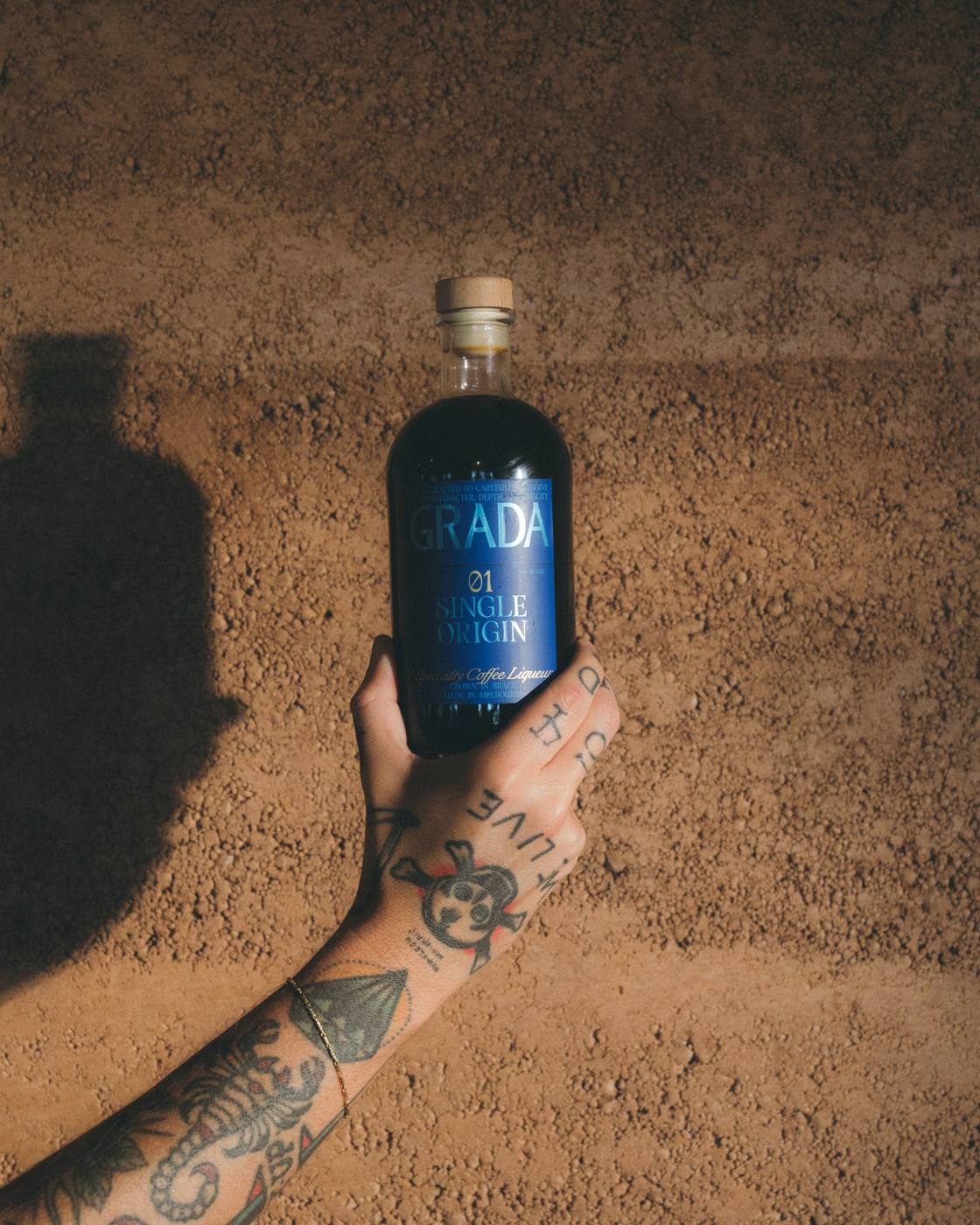
- Hot coffee extraction, Australian vodka, Australian cane sugar.
- Distilled in Geelong through Anther.
- Specialty vs commercial, side by side — the difference is in the glass.
READ THE episode
TRANSCRIPT (AUTO-CAPTIONS, MACHINE-CLEANED). SPEAKERS: THURMAN, CLARA SANTAERA.
Hello everyone, Thurman here from Measured. I've made it my quest to discover the best ingredients and drinks in the spirits industry. So, of course, we teamed up with GRADA's very own Clara Santaera, their head of coffee, to take us on the journey and teach you how we go from farm to bottle to cocktail. And now we come to the bar. It's been an incredible journey to learn about all the hard work and expertise required to take a coffee bean from the farm to extraction.
But now it's time to move into a sphere that I'm a little more comfortable with. Spirits. So Clara, how do we take that excellent coffee and turn it into a coffee liqueur?
— Well Thurman, it all comes down to using a hot extraction method, a neutral grain spirit and sugar. And is there a general ratio you're looking for?
— Yeah, it's all about balance. You want the coffee to be the hero of the cup. You want the sugar to carry and the alcohol to elevate.
— And why is it so important to use specialty coffee?
— Well, Thurman, coffee just isn't another flavouring.
It is the hero of the product. So, we need to hero the farm, the process, and the liqueur.
— Shall we see if you can taste the difference?
— Let's do it. So I have two for you here. One is a special coffee liqueur that we know and love and the other is a general commercial brand.
— That's the winner.
— And why?
— Well, without a doubt. You can taste the farm, the provenance, and the coffee. And that's what gives GRADA its soul.
— Enough with the coffee. We've had enough episodes about that. Where do you get the alcohol and sugar from?
— We use a an Australian sugar cane and a neutral grain spirit sourced in New South Wales which is distilled in Geelong from our good friends at Anther.
— And what's the best way to enjoy a coffee liqueur?
— Well, I personally enjoy a coffee liqueur like I like my morning coffee on the rocks.
Black over ice.
PLAYING FOR THE BOTTLE?0/14
GRADA is built from exactly three things. Which set is right?
EPISODE 10
THE ONE BOTTLE ESPRESSO martini
IN ONE LINE
The Espresso Martini got overbuilt. It only needs one bottle.
- The modern martini got overbuilt: vodka, liqueur, espresso, sugar.
- A liqueur built correctly already holds the cocktail’s structure.
- 100ml GRADA, ice, a hard shake, three coffee beans.

READ THE episode
TRANSCRIPT (AUTO-CAPTIONS, MACHINE-CLEANED). SPEAKERS: THURMAN, CLARA SANTAERA.
Hello everyone, Thurman here from Measured. I've made it my quest to discover the best ingredients and drinks in the spirits industry. So of course, we teamed up with GRADA's very own Clara Santaera, their head of coffee, to take us on the journey and teach you how we go from farm to bottle to cocktail. Coffee 101 started with an espresso martini and the question, how did we get here? Well, I'm going to show you with the world's best and most simple espresso martini recipe. Big alcohol would like you to believe it requires a bottle of vodka, a bottle of coffee liqueur, fresh coffee, a bit of sugar, and a lot of work.
But if there's one thing we've learned, a bottle of GRADA is an espresso martini in itself. So let's dive in. 90 mil of GRADA single origin coffee liqueur, a bit of ice, a nice hard shake, an ice cold martini glass, and of course you can't forget three coffee beans as garnish. Cheers to the simple things. It's really so good.
PLAYING FOR THE BOTTLE?0/14
The one-bottle Espresso Martini is…
EPISODE 11
BEYOND THE ESPRESSO martini
IN ONE LINE
Three serves that take balance beyond the martini glass.
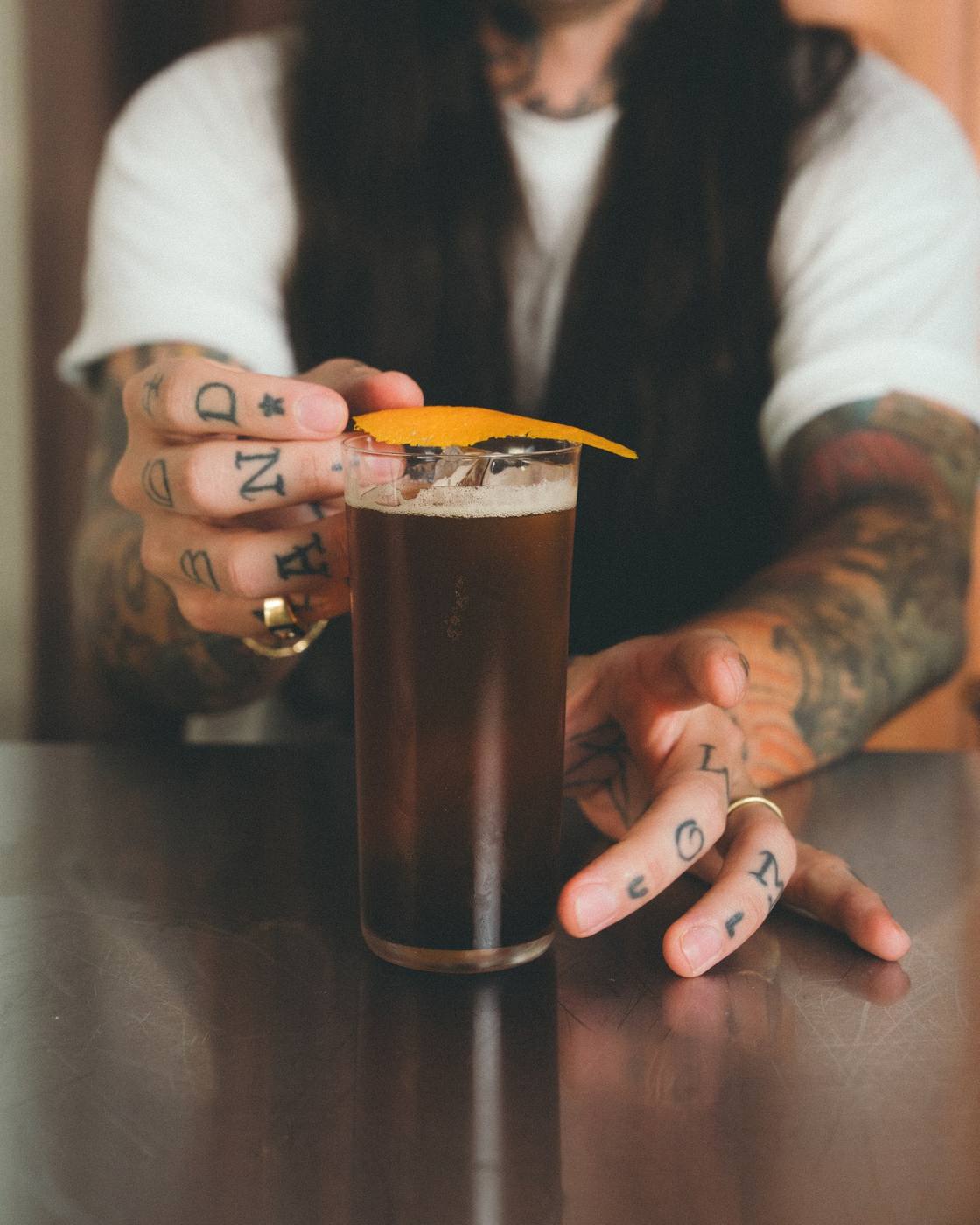
- Coffee Old Fashioned: whiskey, GRADA, bitters, stirred.
- GRADA & Tonic: a pillar cube, dry tonic, orange twist.
- GRADA Colada: GRADA shaken with homemade Coco Lopez.
READ THE episode
TRANSCRIPT (AUTO-CAPTIONS, MACHINE-CLEANED). SPEAKERS: THURMAN, CLARA SANTAERA.
Hello everyone, Thurman here from Measured. I've made it my quest to discover the best ingredients and drinks in the spirits industry. So of course we teamed up with GRADA's very own Clara Santaera, their head of coffee, to take us on the journey and teach you how we go from farm to bottle to cocktail. One of the most important things I've learned from coffee 101 is that exceptional coffee comes down to balance and the subtle flavours.
— I'm going to showcase three cocktails that bring out the beauty of GRADA.
First up, a coffee old fashioned. The flavours of whiskey and lemon and orange blend perfectly with the citrus notes of GRADA. Start with 30 mil of whiskey. 30 mil of GRADA single origin. A dash of Angostura bitters, a dash of orange bitters.
Add ice. With an old fashioned I love to showcase a beautiful clear ice cube. Strain your old fashioned. Then garnish with an orange twist and a lemon twist. Next up in our simple but beautiful cocktails is the GRADA and tonic.
To keep it cold a beautiful pillar ice cube. 30 mil of GRADA
— single origin coffee liqueur. Just like gin, GRADA has several beautiful botanicals that really shine against the sugar and bitter notes of a dry tonic. And just to give it a few extra citrus, just the essence of an orange twist. And that's our drink.
And for our final cocktail, it's inspired by how coffee can combine cultures, just like GRADA combines the coffee of Brazil with the spirit of Australia. The next drink, the GRADA Colada, combines Vietnamese coffee with of course the famous Pina Colada. 60 mil GRADA single origin, 60 mil homemade Coco Lopez, a bit of ice, and a nice shake. Strain into your most fun and funky cocktail glass. For us, this custom GRADA one.
PLAYING FOR THE BOTTLE?0/14
What’s the GRADA & Tonic build?
THE SCORE
YOU'VE GOT 14 QUESTIONS left.
The questions live under each episode — answer as you watch. Pass is 12 of 14, and the quiz never blocks the videos.
CLOSE.
YOU KNOW WHAT YOU'RE pouring.
CLAIM THE bottle.
One per person. A hundred in total. One email — your code.
CHECK YOUR inbox.
Your code is on the way. One bottle, on us — pour it properly.
THE 100 BOTTLES ARE gone.
Fast crowd. Leave your email and we’ll tell you about the next drop — nothing else.
Done. You’re on the list.
FROM SOIL TO SERVE
THE provenance.
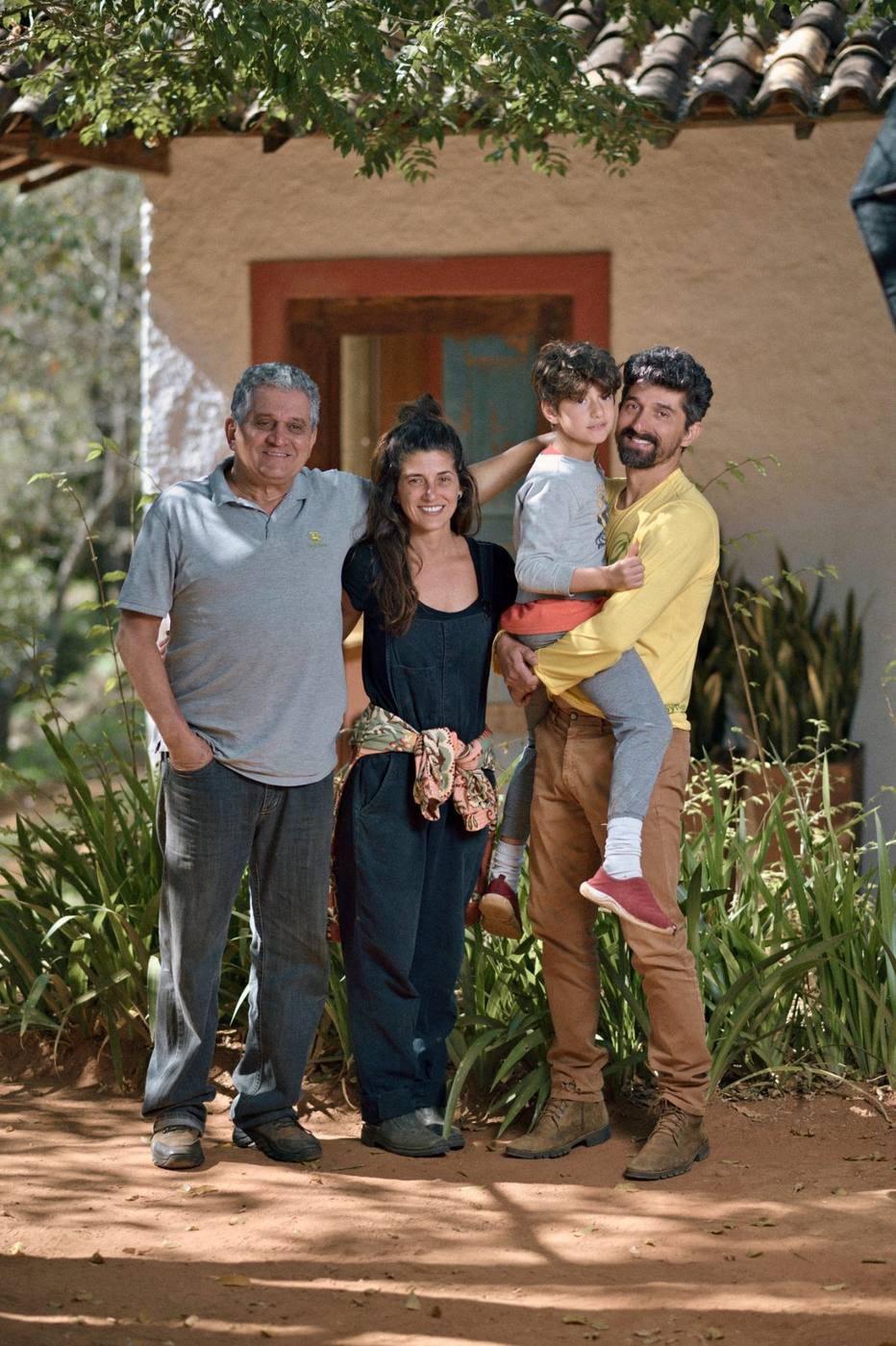
GROWN AT
FAZENDA PINHAL
Sul de Minas, Brazil — Pedro Gabarra, sixth-generation farmer